
Outlay

The production schedule that builds itself.

Outlay turns demand and master data into a schedule planned against the machines, people and constraints you really have, then costs every run live against standard.

A Libra Europe product
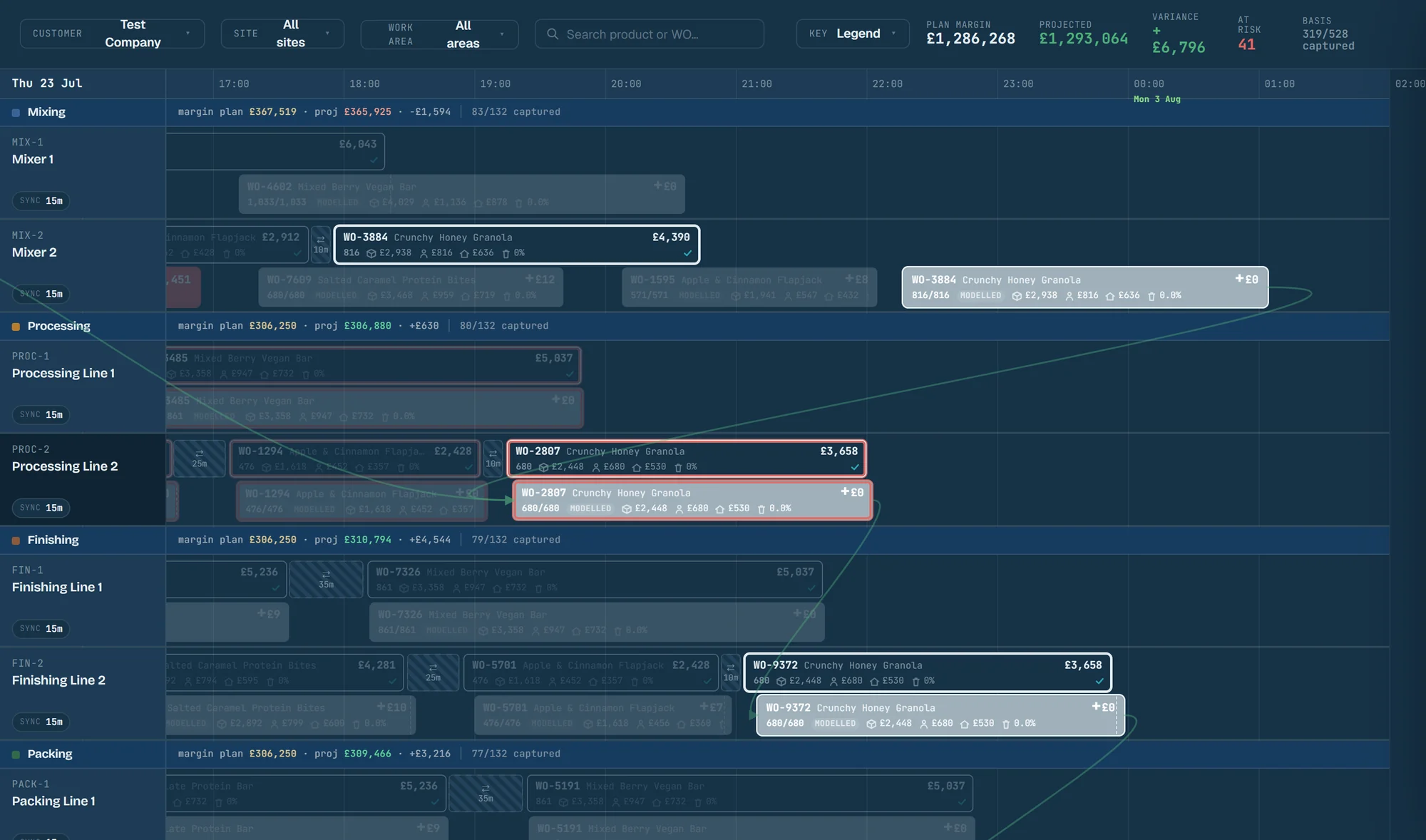
The Outlay cockpit in dark mode: a Gantt of mixing, processing, finishing and packing lines, plan and actual cards for every work order, and one product's dependency chain lit across the lines.
The cockpit, with one product's chain traced from mixing to finishing. Demo data.

From reviewed data to a schedule in one action.

The planner checks the data. Outlay does the arithmetic of who and what can run where, and when.

  1. 1

    Load demand and master data

    Items, recipes, routes, resources and demand come in from your systems or a spreadsheet, each record showing its source and what is missing.

  2. 2

    Generate the schedule

    Outlay plans every operation against finite machine time and qualified labour, with changeovers, allergens and material feeds as hard rules.

  3. 3

    Run it in the cockpit

    Plan and actual sit side by side on one Gantt, and any run lights up the chain it depends on and the work it feeds.

  4. 4

    Let the floor re-cost it

    Each reading from the line re-derives the run's projected cost and margin against standard while the shift is still going.

A day's schedule, line by line.
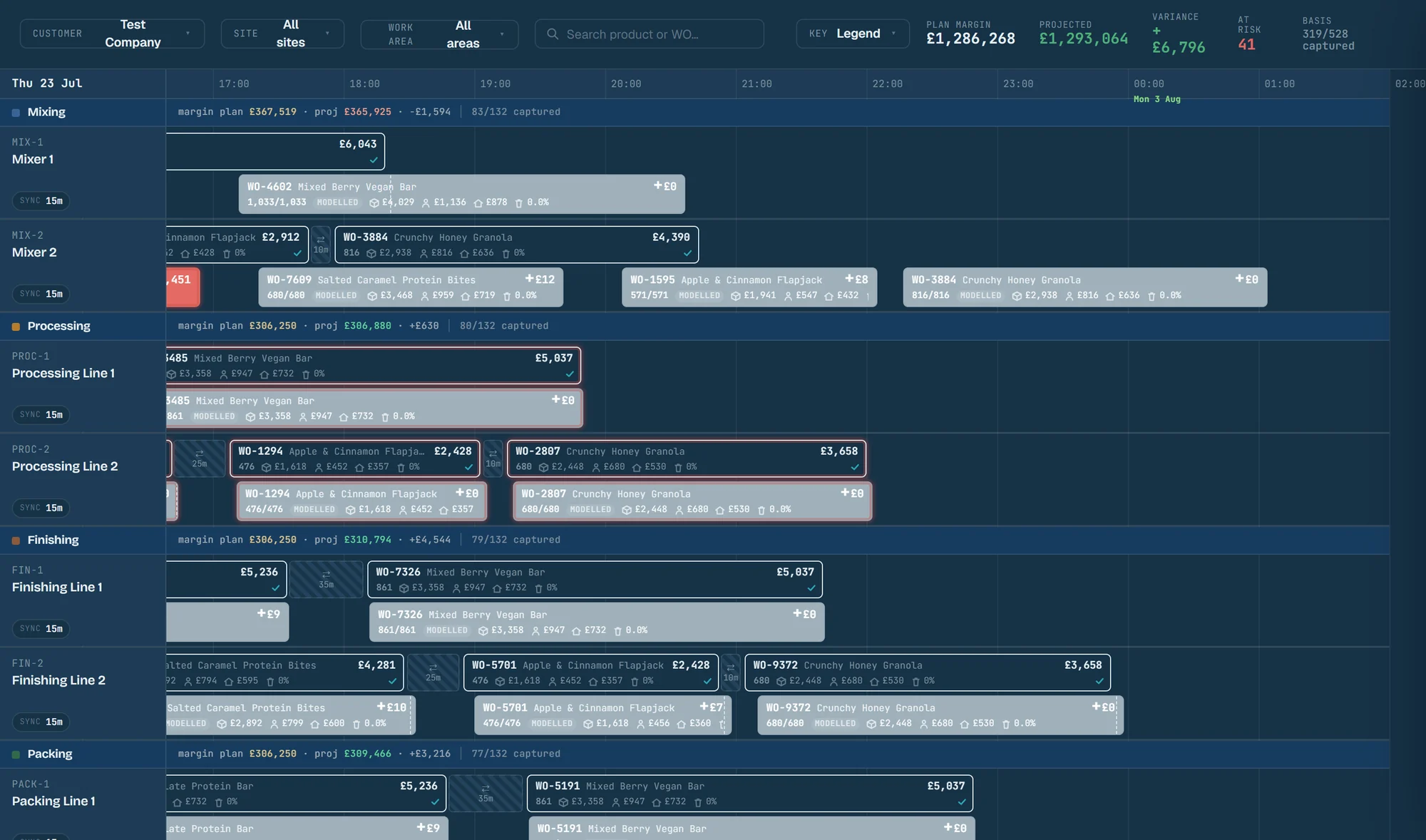
The Outlay cockpit: work orders on mixers, processing, finishing and packing lines, each with a plan card above an actual card, changeover blocks between runs, and plan and projected margin per area.

Mixing · Processing · Finishing · Packing

The cockpit for one site across a day. Demo data.

Every line, every run.

Mixers, processing, finishing and packing lines, with each work order placed where its machine and crew are free.

The rest of the plant, on the same model.

Crew needed, run by run

Each block is one production run, as tall as its crew and as long as it runs, stacked by area against the staffing you have, so a shortage shows before the shift.
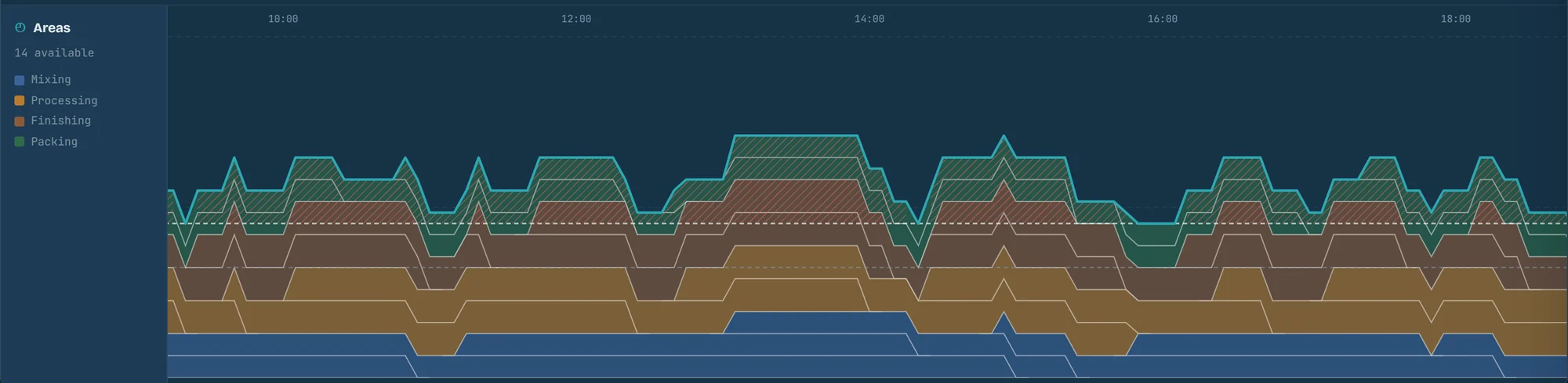
The Outlay labour profile: production runs stacked by area across the day, coloured by mixing, processing, finishing and packing, with dashed lines for the crew on hand.
The labour profile for one site and one day. Demo data.

Every table the plan needs

Pick what you will use Outlay for and the setup shows the tables that takes, how they depend on each other, and which are already filled.
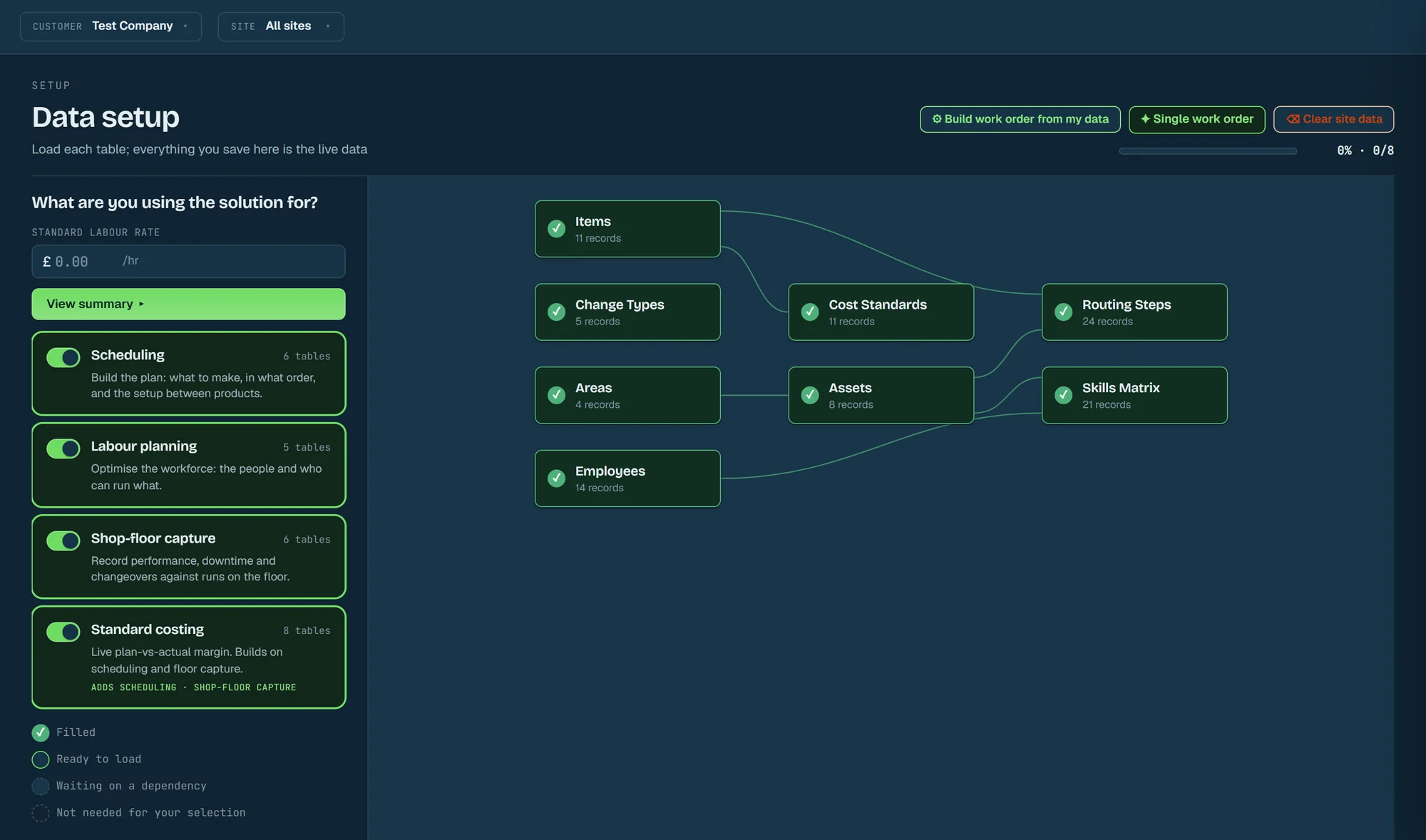
The Outlay data setup screen: switches for scheduling, labour planning, shop-floor capture and standard costing beside a map of the tables they need, from items and areas to cost standards, routing steps and the skills matrix.
Data setup, with every table filled. Demo data.

Margin by site and operation, live

Planned against projected margin, schedule, scrap, downtime and crew for the whole estate, with the biggest opportunity named and a list of where to look first.
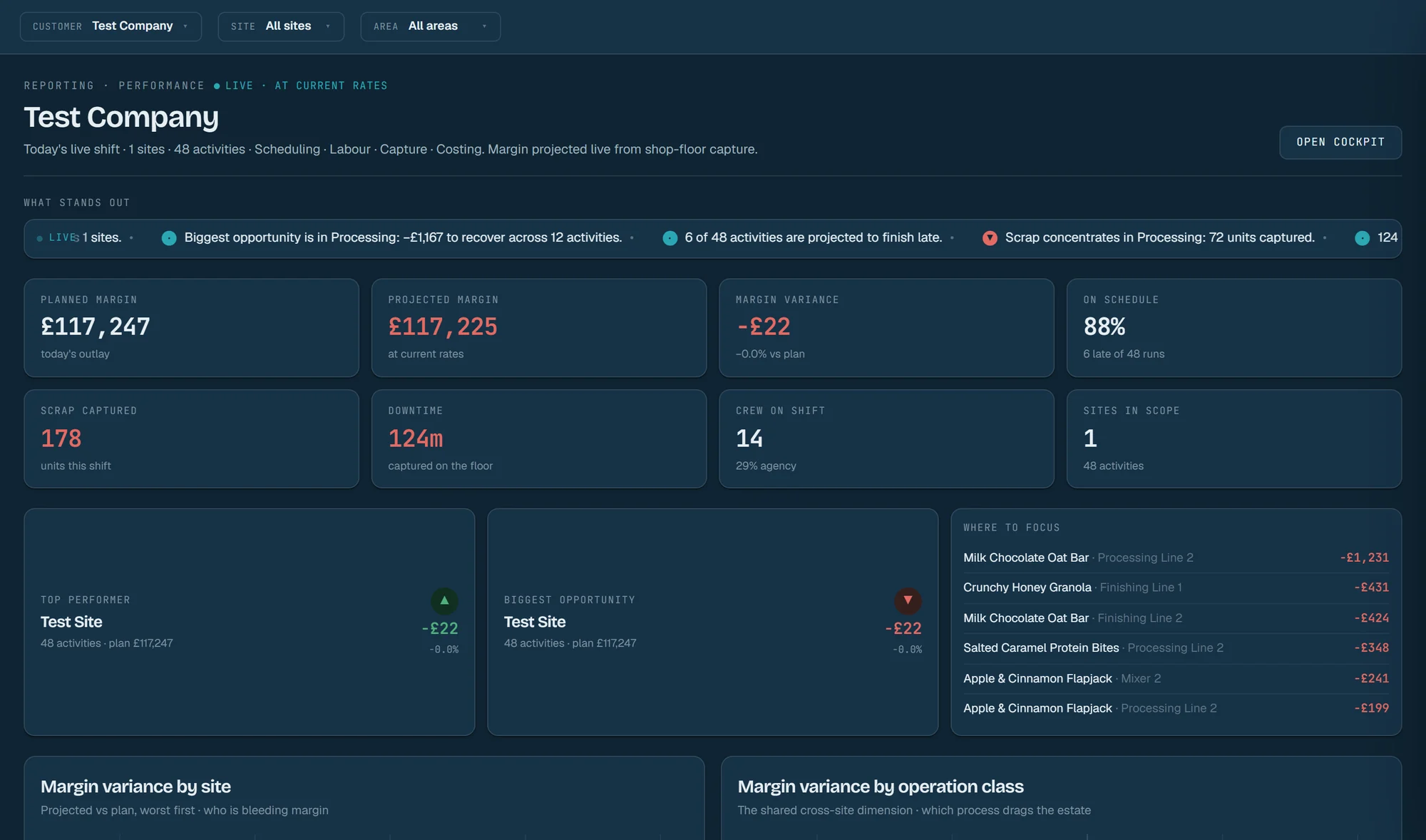
The Outlay reporting screen: planned and projected margin, variance, on-schedule share, scrap, downtime and crew tiles, the top performer and biggest opportunity, and a where-to-focus list of products and lines.
The roll-up for the demo company. Demo data.

A slow oven shows up in the cockpit while the shift still has time to recover it.

Questions planners ask before they trust it.

Does Outlay replace our ERP?
No. It sits alongside it. Master data comes in from your existing systems or a spreadsheet, and Outlay adds what an ERP does not do live: finite-capacity scheduling with labour, line capture and costing against standard as the shift runs.
Is the schedule optimal?
Outlay produces feasible plans that keep every hard constraint you give it. It does not claim a mathematically optimal schedule, and the planner stays in charge of the trade-offs.
Our master data is incomplete. Can we still start?
Yes. Each record shows where it came from and which fields are absent, and a schedule that depends on an unconfirmed time, rate or feed shows it as a blocker rather than inventing a number.
Is the margin real or estimated?
Both, and labelled. Where the floor has captured readings, cost and margin come from them. Where a run has no readings yet, Outlay shows a modelled projection and says so on the card.
What happens when a line breaks down?
Outlay drafts a recovery plan. Work that has started, completed or been locked stays protected, and a planner reviews and approves the changes before release.
Who sets it up?
Libra configures Outlay for each manufacturer from your own lines, products, routings, crews and cost standards. It is the same product for every plant, with your data loaded.

See your own plant scheduled in Outlay.

Talk to Libra about loading your master data and generating a schedule against the machines, people and standards you actually have.

Talk to Libra about Outlay

Tell us how you plan today, and we will show you the product and what it would need from you.